The Day I Bought the Gas Masks

It was a cool early November in West Denver. My roommate at the time and I were worried about the results of the November 2020 election, as Donald Trump, regardless of whether he was going to win or lose, was sowing doubt as to whether the election was legitimate. Already having secondhand experienced the George Floyd protests that made me fear riding my bike into a sea of teargas everynight, I made the purchase and bought Soviet-era gas masks out of fear that civil unrest post November 3rd would make the events of the protests seem like small potatoes.

My acting theory on the night of the elections was simple: Trump acolytes, using alternative networks such a Parler and Telegram, would use the slow counting that typified election week last year to disrupt things, usurping election divisions throughout the country and throwing everywhere into chaos. I remember distinctly telling my roommate that a Latin American style coup would play out before our eyes. Along with ordering the masks, I got every item in FEMA’s disaster preparedness checklist, and rigged an old phone to act as a closed circuit camera in front of my apartment door.

Election night 2020 in Denver came and went. Early on in the night, the state was called for Joe Biden, and outside of myself and a small group of people, things seemed relatively calm and peaceful outside. I leaned a little bit into election news, but it played out in the background of my everyday life, with my roommate moving out and my future living plans eclipsing it at most points. The one bright spot about the election week for me personally was the flipping of Georgia. At the point, I made the decision to return the masks, as any coup attempt that Trump would try at that point would be more focused on the swing states, not necessarily focused towards dark blue Colorado.

Thought I ultimately decided to return the gas masks I was proven right.

Multiple lawsuits in every state from Nevada to Georgia. I watched the news, fearing for my Nevadan and Georgian friends that would see the blunt end of a successful lawsuit by the Trump Campaign. They all failed, with Trump’s attempted coup culminating for that election season in the January 6th attacks on the Capitol.

That being said, the coup attempt, and the attempt to rewrite its history, isn’t over. Right wing pundit Tucker Carlson’s latest special is a revisionist history of this attack, stating that it was a “false flag” and a “honeypot” in much of the programming. The Governor-elect of Virginia, Glenn Youngkin, spoke at an event prior to election night 2021 where a pledge of allegiance was held with a flag that was at the January 6th insurrection. To this day, former President Trump has not conceded the 2020 race, choosing instead to use most of his post-presidency to attack the Biden administration and build a social media network for his far right followers.

So, while Trump’s party is out of power in Washington now, the ease at which it was able to regain much power in Virginia and New Jersey by slightly pivoting towards the center should be disturbing, and the coup on democracy is just beginning. While the gas masks and protection against street mobs may not be needed now, it may not matter when they are no longer on the streets, but in the halls of power democratically elected.

featured image is a stock photo of a gas mask

The True Horrors of a Cemetery: A journey to Riverside

When I did my RTD infrastructure ride for the N-Line, I took a short diversion into Riverside Cemetery. As I rode into the cemetery from a road scarily close to traffic, it felt as, for a moment, the city disappeared. The graves started out small, increasing in size while I road into the cemetery.

The final resting place of territorial governors, mayors, and civic leaders, Riverside was built in conjunction with the celebrations of the Centennial by the new State of Colorado.

Flash forward 145 years, however, and Riverside feels a bit like an anachronism compared to the surrounding area. To get to the cemetery, I had to take a journey under a dangerous freeway underpass, go by the headquarters of the infamous Suncor Corporation, and ride right by a giant impoundment lot. On the horizon of the cemetery, the smoke stacks of a power plant billowed with the strangling smell of industry that defines much of North Denver.

But, at the cemetery, I felt peace and solitude, save a handful of cars that were around.

I thought about the cemetery a lot on my RTD ride. October is the month where the dead and the cemetery as an area of horror and unnatural monstrosities come to rise is glamorized.

Yet, out of any of the places I rode that day, riding through the cemetery was a welcome distraction from traffic and difficult navigation.

If I find more solace in the resting place of the dead than the surroundings creations of the living, is the setting of long dead monsters worse than the living monsters we have created around us?

*Featured image is a shot from Riverside Cemetery*

Two Cigarettes, Delta Surge, and new Work: A short reflection on the Scorching Summer of 2021

As the early signs of fall start to appear along the Front Range and summer starts to recede, now more than ever seems like a time to reflect on one of the more aggressive summers of my lifetime.

The biggest lowlight for me was the fact air quality was horrid several times throughout the year, including the past week. A mix of bad ozone from increased car commutes and smoke blowing in from the fires to the west of us made it hard to be outside. I reduced many of my outdoor activities, vouching to do them after the sun went down. Today, in fact, it reached the point that some local news outlets likened it to smoking two cigarettes a day.

The surge of the Delta variant has been something that overshadowed much of the drop of restrictions in Denver and Colorado While President Biden wanted to declare a victory on July 4th with a stated goal of getting to 70% vaccination by one dose, that victory would not come until later in the summer, and seemed overshadowed by the fact that Delta readily spread through the state, testing my relationship with the various events and places that I would go to as numbers rose.

The one silver lining of everything was getting a new job. Not only did it give me the freedom to have weekends, but the raise I got from leaving my previous job was something that has allowed me to afford the experiences that I have had this summer.

What a Hamburger is all about: A Symptom of Our Auto Addiction

One of the largest non-COVID stories in Colorado has been the expansion of In N Out to several locations in the Front Range. The story is the same at each of them upon opening: Long car lines that stretch for miles with people waiting hours to try the cheap burgers, milkshakes, and fries that Californians are often nostalgic about, often with police involvement. In fact, Lakewood PD tweeted directions to get into the In N Out line when it opened.

https://platform.twitter.com/widgets.js

On Monday night, I decided to take a bike ride and see how the pedestrian experience is like at In N’ Out.

The Ride Out

After passing through the core of downtown, I took the Lakewood Gulch Trail until I had reached Knox, a street that had a painted Bike Lane. From Lakewood Gulch until 1st , it was a steady uphill climb with a descent near the end. 1st Avenue had a unprotected bike lane, which I took roughly until S Pierce Street, which acted as a vein to Alameda, a location where a multi use patch was along.

Approaching the Restaurant

As I got closer and closer to In N Out, a sea of orange cones started to appear. After going through them, I realized that I was in the car line to the restaurant. I proceeded slowly, making myself as visible as I could to drivers.

The Entrance to the In N Out

As I got closer, I started to notice the police presence. From when I got to In N Out to when I finally left, at least 4 Lakewood Police Cruisers were monitoring the line along with Orange vested guides.

There was no real wayfinding for cyclists, so I cut through a nearby bank’s parking lot to get to the corner of Wadsworth and Alameda and approached from that side. I found one bike rack near the front of In N Out, using it to lock up.

Ordering and General Impressions

From the time I ordered to the time my food was ready, it took about 20 minutes. I entered the restaurant, got my ordered in, and went outside due to how hectic and large the crowd was. The one upshot of the non-food experience was the fact that the outdoor patio was really spacious, with walls facing Alameda that acted as a buffer for the noise of the street.

The main In N Out Patio, with a large parking lot adjacent to it

Behind the one bike rack, there was a roughly 20-30 spot parking lot filled to the brim with cars. As I waited for my order, I struck up a conversation about motorcycle helmet laws with an employee on his break, connecting over the fact that we both had family in my birthplace of Oxnard.

I won’t talk too much about the food suffice to say that it was what I remembered it being quality wise when I was a boy growing up in Southern California. For $8, I was able to get a full meal out, unheard of in many parts of the Metro at similar peer restaurants.

Leaving and Concluding Thoughts

As I left the restaurant to head back towards Denver, a weird feeling came upon me.

COLORADO SHIRT - In-N-Out Company Store
The Artwork for the Colorado In N Out Tshirt, designed by Carl Bork

For me, the T-shirt that I had bought with the image above encapsulated the problem that I have had with In N Out since I have moved towards cycling as my primary form of commute. In the impressionist image above, the highway is seen as a natural extension of the beautiful mountain landscape. The In N Out I went to, save the extended patio and single bike rack, seemed to conform itself to the car culture that the chain itself had grown up in since it’s founding in 1948.

For In N Out and many of the fast food restaurants established in the late 40’s/50’s postwar boom, they had to conform to the car culture at the time, coming up with jingles, advertisements, and ways to get peoples attention during the early days of car radio. One ad that I remember on the long trips I would take to Los Angeles with my parents as a kid captured the infectiousness of jingles of the early automobile era.

As I reflect on the fact that air quality has significantly declined, pedestrians are getting killed by careless drivers throughout the Front Range and United States at large, and obesity’s co-morbidities kill thousands of people a year, I get the uncomfortable feeling that fast food writ large is a symptom of our decline. And, to steal from the In N Out Jingle, maybe that is what a hamburger is all about.

Ghost Ride Chronicles Part 1: Anything But Little

April 27th, 2020. 9:58 PM

The world, including the State of Colorado, is in the midst of strict lockdowns. The world has largely moved online. I am working a night shift in security, and I have a radical idea.

What if I rode during off hours to avoid exposure to COVID-19?

I had been pondering the idea as a way to escape from a bad living situation by clearing my head on bike rides. My first target was Downtown Littleton.

First Impressions

As I headed west towards the South Platte River, thoughts raced through my head. What if an overzealous police officer caught what I was going and decided to arrest me for being out during the Stay at Home order? What if I hit a bad snag and was stuck in the middle of the night with no one to grab me? What if I caught COVID and was hospitalized for weeks? I had these feelings as I was headed southbound. Riding with a two light setup, I felt nervous every time I was near a major road along the trail.

Crossing into Arapahoe County

Roughly around the Arapahoe County line, things intensified heavily. My nerves shot up as I passed a major shopping center with a rent-a-cop esque security guard patrolling along the edges. He shined his light on me briefly as I transitioned from the S Platte Trail to the Mary Carter Greenway. As I made it there, I started to assess my general tiredness, realizing that Littleton would be my final destination. Past the shopping centers and the golf course, there was nothing out of the ordinary to report save the fact that there was a significantly smaller amount of cars on the road.

Getting into Littleton

As I reached the arterial trail into Littleton, my nerves got the best of me again. I ended up along an arterial that led to the main street in Downtown Littleton. Hoping to make it the the Littleton Downtown station, I headed towards Arapahoe Community College. Viewing the station from the community college, I saw police patrolling the parking lot. Not wanting to end up with a ticket for breaking whatever sort of curfew they had, I sprinted back towards the artery and towards the main stretch of the Mary Carter trail.

Reflection

For a lot of reasons, this ride felt like a “training wheels” ride. It was along a fairly established trail, had a lot of moments that I could bail out along, and had no particularly odd features to it. It would serve as a confidence builder for the more interesting rides that I would take in the near future.

The Ghost Ride Chronicles

These are not the typical stories you hear in regards to bike riding. Hell, these are not the typical narratives that crop up when bicycles are discussed in general. Instead, these are the narratives of a time in my life where the peace of a middle of the night ride when I worked night shifts outweighed the paranoia of increased police presence during the beginning of the pandemic, the fear of being chased down by security guards, and the ultimate fear of the unknown. While the paths are known, the journeys on them when the hour is 3 AM vs. 5 PM are different, and the experiences were unforgettable. Welcome to The Ghostride Chronicles.

The longest 2 weeks of our lives

“This was unexpected. … And it hit the world. And we’re prepared, and we’re doing a great job with it. And it will go away. Just stay calm. It will go away”

– Donald Trump, March 10th, 2020

“Bottom line, it’s going to get worse.”

– Dr. Anthony Fauci, March 11th, 2020

Thursday, March 12th, 2020 was the end of the world as I knew it. It was the last time I was inside a restaurant for an extended period of time, the end of a steady stream of interviews I was getting for the job search, and the final day that any major concert would occur in Denver. Post Malone’s Thursday night show at Pepsi Center was widely panned for the proximity to what would be the last major event before the Stay At Home orders were put in.

At the time, I expected it to be merely a two week quarantine. I was naive thinking that beating a pandemic would simply mean staying at home and not going to restaurants, which were takeout only, during this time period. At the same time I was afraid. Rumors began to swirl in some circles online that the National Guard was going to be enforcing travel along I25, and I would have to carry papers around to justify getting to my job as an essential worker. At the same time, the internet was inundated with articles from various sources and scientific papers that made COVID-19 out to be a behemoth.

In a lot of ways it was, but not just because of the large reproduction rate coupled with the large amount of people that were asymptomatic and potential spreaders. It was an unstoppable behemoth because our country did little to combat it until the beginnings of the Biden Administration. When Trump began to use press conferences as de facto campaign rallies, relied heavily on rapid response tests to avoid social distancing and mask usage, and even downplayed the fact of COVID-19’s effect on him when contracted, I knew that it would take a sea change at the federal level to take this seriously.

Blaming everything on the Trump-sphere in DC shouldn’t acquit the rest of our leaders, however. Locally, the mayor of Denver, Michael Hancock, closed down dispensaries and liquor stores for 3 hours, sparking lines that could have potentially acted as superspreader events. His travel plans in December despite telling Denverites to stay home sparked further outrage. A “stop the madness” rally was held at Bandimere Speedway, as conservative figures such as Patrick Neville and Michelle Malkin championed their ultimately failed lawsuit against Governor Polis for his Safer at home orders. When our state legislature returned to session, Republican lawmakers refused to wear masks, with some even mocking the practice across from their Democratic colleagues.

And yet, as I reflect on the one year anniversary of this tragedy, my mind flashes back to the two week quarantine. In retrospect, it was a testament to our arrogance as a country, the exceptionalism and piecemeal response that we as a country have had in regard to our healthcare system going back to the days of the debates over its overhaul under Truman, Clinton, and Obama. It was a naïve proposal that received blowback from hyper-individualists and a segment of American society that believed things raging from herd immunity, a virus destroyed by a hot climate, or wrongly believing it was a hoax. For me, however, it continues to be the longest 2 week quarantine of my life.

We Need to Pee along RTD: A case for More Light-Rail Public Restrooms

Years ago on my 24th birthday, I was riding the bus the wrong way down Colfax to meet a friend at a bar. I was drunk, not completely aware of my surroundings, and realizing an unfortunate fact that would change the trajectory of my journey.

I needed to pee.

While I was able to pee that fateful night by buying fries and a shake at Burger King and using their restroom, I recognize that I had the privilege because I had the money to essentially buy access to the bathroom, which many people don’t have.

One thing I have noticed in Denver since moving here over five years ago is the lack of public restrooms. Outside of a handful of parks with public restrooms and the mobile restroom maintained by the city, its a fairly patchwork network that is Lower Downtown-centric and has about 15-16 facilities at any given time. A full map of the system can be viewed at the embedded map below.

As things stand right now, the one RTD facility in the city of Denver with a public restroom is Union Station, which has come under fire recently in tandem with RTD as a whole for implementing safety protocols that are seen by some as restrictive to the unhoused population.

With RTD looking to hire a homeless outreach coordinator to engage in a more meaningful way with the largely unhoused populations and the board to set to vote on a measure to allow more affordable housing at their facilities, it makes sense to throw an olive branch towards folks from all walks of life that have lost faith in RTD.

A public restroom along a handful of stops.

Given the fact that there are many stations that act as multimodal hubs, such as the Broadway Station in Denver or the Oak Station in Jefferson County, there is often a large amount of idle time that people have between waiting for a transfer. Rather than trying to find a nearby business to buy something from and hope to use their restroom or duck in a corner and hope a security guard doesn’t find you, wouldn’t it be better to have a semi-regularly maintained public facility that could be used?

Some may argue that building and maintaining public restrooms along light rail line is something that shouldn’t be a priority at this time and would be a drag on the system. After all, shouldn’t restoring lines and schedules lost to the pandemic be a priority?

While I would agree that recovery of lost service should maintain the top priority of RTD, building trust with ridership that returns after the pandemic by prioritizing rider experience and keeping passengers healthy and safe is invaluable. Public restrooms would be a facet of this, adding something that would be an extra “push” to get someone to use public transportation versus a single occupancy vehicle to get to their destination. At the very least, the RTD Board of Directors should research systems that have restrooms along their stops to see if its a viable option, as ridership increases once vaccination has been completed.

Down with Cyclists, up with People who ride Bikes: A Case for People First Language

Back in September of 2020, I was riding one night to get a decent loop in and to clear my head after having a rough conversation. I was going to the Platte River Trail on 13th Ave, which has a part before the underpass that crosses a major train line. I got stopped at the track behind a large coal train, headed northbound towards Wyoming presumably. As I was waiting for the seemingly thousand car train to pass, a person rolled up on their bike next to me, carrying what seemed like ingredients for their family in a bag from a Dollar Store. After 10 minutes of the train passing by, they reached for their phone. It was in that moment that I eavesdropped on their conversation that this was a working class person, coming home one their only form of transportation.

This is a person rides a bike.

The Railroad Crossing on 13th near the Platte River Trail

On my way back from a ride yesterday, a person went by me at what felt like 16 miles per hour, talking on his Bluetooth while doing so.

This person is a cyclist.

Defining Cyclist

Yesterday, I put out an open ask on several forms of social media what people thought of the term “Cyclist”.

The conversation that ensued conjured up many different interpretations of the word. From a person that rides exclusively for sport, to a Middle aged Male in Lycra (MAMIL), to the simple dictionary definition, the word brought out strong feelings in people.

As someone that rides a bike, I seldom use the word cyclist, and think its a bad way to define ourselves.

Growing up in the 2000’s, my exposure to cycling was mostly based on the perceptions of bicycle racing at the time. My parents gave me a Livestrong bracelet, and one of my favorite events to watch was the Tour De California, the closest consummate thing in the US to the Tour De France.

In other words, cyclists were the elite for me.

Major companies in the aughts took advantage of the popularization of cycling to sell riding a bicycle in the 2000’s as a lifestyle, with sales being high until the Great Recession. During the COVID-19 pandemic, where people have been encouraged by car free streets to ride their bikes, there has been a third “bicycle boom” despite another economic recession looming large.

I personally pride myself on the fact that I have never paid more the $200 for a bike in my adult life. While there are some overhead costs, including advanced maintenance, getting and replacing proper gear, and repairs from really dumb ride decisions, I have still kept things low cost by never buying into things that I can’t afford.

When people hear the term “cyclist” however, they don’t think of people like me.

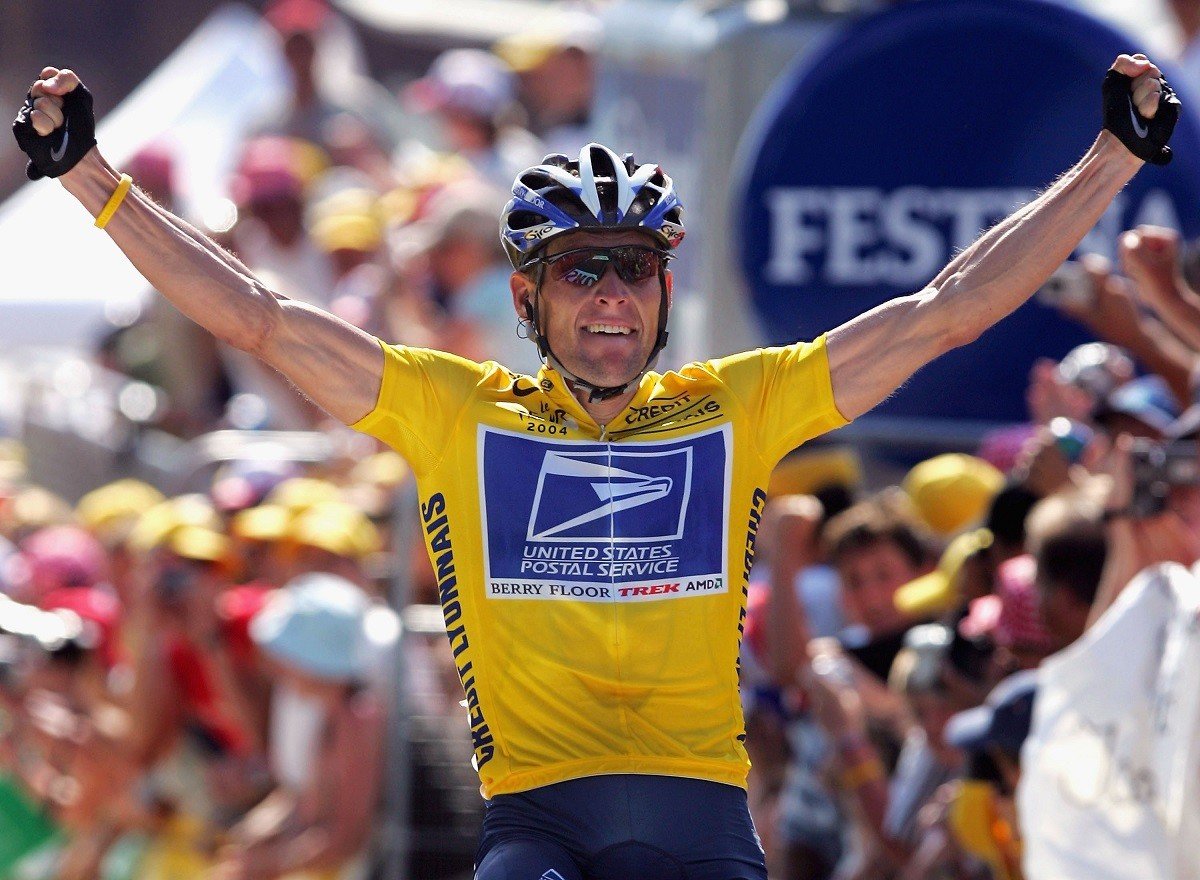
They think of Lance Armstrong. The white, middle to upper class and middle aged dude that nearly ran them over on a multi-use trail. They think of people who own a bike as a fitness luxury versus a significant mode of transportation. Above all, as evidenced by the cover photo with the wordcloud, they think of spandex, lycra, elitism, and sports before anything else.

Lance Armstrong at the Tour De France, 2004. Getty Images

People first language is important in eliminating these stereotypes for casual riders. A “disabled person” is not defined by their disability, and is instead a “person with a disability”. Likewise, a “cyclist” should be a “person who rides a bike” to preserve their basic humanity. The faster the term cyclist is discarded for everyday riders, the faster we can advocate for infrastructure without conjuring up stereotypes amongst people on the fence.

When the crossing gates came up, I realized the person taking their groceries home had to navigate a part of town that was significantly hostile to people who ride bikes. Many Westside neighborhoods such as Barnum and Valverde have been neglected from an infrastructure, with paint and sharrows being the currency of the region. To kill the cyclist and elevate the person on a bicycle grammatically would benefit all riders, and is something we should push for everyday.

I’m Tired of Ads: The KFC Lifetime Short and the Era of post-advertising.

*Spoilers for A Recipe for Seduction*

Harland David Sanders was a lot of things in his lifetime. A soldier in Cuba in the early 1900’s, a midwest carriage painter, and a lawyer that literally ended his law career with a courtroom brawl, all of the things Mr. Sanders did up until 1930 would be enough to, at the very least, be a page in a book of oddities.

Then, the Great Depression hit,

During an era of rapid economic deflation, Shell Oil Company gave Sanders a location to work at in the state of Kentucky. With the skills he had built up over the years, he started serving food at his station, including steaks, country ham, and fried chicken.

Flash forward 20 years and a shootout amongst rivals later, and Harlan Sanders is now Colonel Sanders, re-commissioned by the Governor of Kentucky (who was also a friend). Sanders would then go on to found the business we know him for in 1952, Kentucky Fried Chicken.

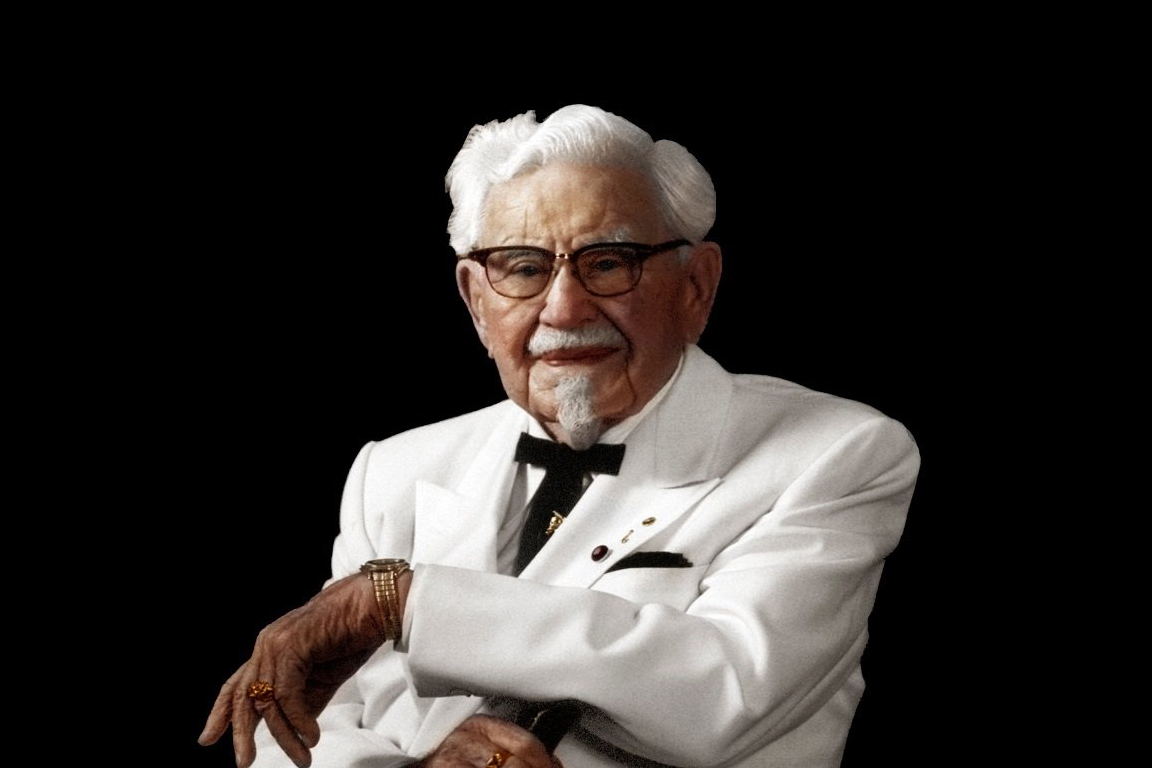
Colonel Sanders near the end of his life

Flash Forward sixty eight years.

When the announcement came that Lifetime would be making a “steamy holiday love affair” based on the life of Harlan Sanders, I expected literally none of this to exist in it. As an off and on critic of advertising and cultural phenomena, I decided to check it out on its own merits, separating the blatant advertising from the actual content.

Mario Lopez to Play Colonel Sanders in Lifetime and KFC's A Recipe for Seduction Mini-Movie
Mario Lopez as Harland Sanders

The Story

A Recipe for Seduction stars Mario Lopez as Harland Sanders and Justene Alpert as Jessica, an heiress, as star crossed lovers. One Christmas-y night, a wealthy suitor named Billy Garibaldi (Chad Doreck), proposes to Jessica in front of her mother, Bunny (Tessa Munro), but faces rejection from Jessica while her mother and gay best friend Lee (Martin Murrow) fight to convince her either way for and against accepting the proposal, respectively. Harlan arrives on the scene, a chef from a culinary establishment that is named a few times and forgotten. What matters to Jessica is his personality, and a secret recipe for chicken that the cast mentions ad nauseum after his arrival on the scene. Jessica and Harlan fall in love instantly, while her mother Bunny tries to sabotage the relationship, as its revealed Billy and Bunny are scheming to force a marriage so the family can gain access to the Garibaldi fortune (and, for Bunny, to continue an affair Billy and Bunny are having). Jessica finds out about the sabotage from Harlan, and confronts her mother. The end of the story is comprised of a scene where Lee pushes a chair to help Harlan and Jessica to escape the capture of Bunny and Billy, and flashes forward to a year later. Harlan and Jessica are getting married in a picturesque, with Lee officiating the ceremony. Billy and Bunny are together too, with Bunny being a patient at a psych ward and Billy coming in with a drumstick of fried chicken, presumably a stick.

Story Analysis

If you knew absolutely nothing about what KFC, Colonel Sanders, or Lifetime was, this short film would play very much as a parody of the episode of a soap opera. As the myriad articles have mentioned since its airing, the term “soap opera”, was in fact made to sell soap, and this short film embraces that ethos. Besides the bulging muscles common in romance stories, Lopez’s Harlan is a tongue in cheek look at the “sexy-blank” trope in a lot of ways. The other characters hit on other stereotypes and bits from soap-operas, and the entire setting feels like the fantasy of a Nicolas Sparks novella.

Why it Works

Once context is inserted, the whole thing seems absurd. Its an ad anyway you shake it, and is the first piece of custom branded content that the network has put out. The important thing is it made the parent company money. Yum! Brands, the company behind KFC, Pizza Hut, and Taco Bell, posted gains to their start price since both the announcement and airing of the short movie.

A graph going back to early December for Yum! Brands showing the gradual rise in stock.

While there are a lot of things to take into account, including increased business from holiday travelers and those on the economic fringes who can’t afford to eat out somewhere fancier, the trendline is still favorable for Yum. Long term performance of the stock is seen to be generally good, and it seems like it is the jolt the chain needs given the fact Americans are cooking at home more.

The more important and interesting thing to me is what A Recipe for Seduction symbolizes. While filming began in 2018, the airing during a pandemic where locally owned restaurants and chains are shutting down at a rapid rate due to a mixture of factors is not lost on me. It is an extended ad for a chain that is part of a company that, while having struggles many companies in the food service industry have, is still surviving. Even if the piece didn’t have the word of mouth popularity to drive sales for KFC, Yum would survive this pandemic, while places such as Racines, Armidas, and Milo’s Sports Tavern have permanently shut their doors in Denver.

The Era of Post Advertising

As the Millennial generation starts to age and Generation Z begins to have purchase power, advertisers are trying to build out profiles for them. In the era of targeting and building up detailed profiles on what a person buys, advertisers should have the inherent advantage. However, with an economic recession and financial lessons learned from millennials, Generation Z is incredibly skeptical of advertising despite constantly being inundated with it. Time and time again, authenticity is a major factor in why they buy things.

Image may contain: 3 people, meme, text that says 'Established Titles [Early Black Friday Offer] Lowest Price Ever! 80% Off. Honor your Scottish heritage. Own a piece of Scotland and become a Lord today. You can't buy class Buy 1sqft of land in Scotland and become a Lord for $49.95 ESTABLISHEDTITLES.COM [Early Black Friday] Lowest Price Ever. 80% Off. Each Lord Title Pack includes: dedicated plot land measuring 5 square Learn More'
A recent targeted Facebook ad

With Americans of all ages staying at home and looking at their screens more due to COVID-19, Generation Z is not the only group being marketed too. Baby Boomers, Generation X, and even Millennials are all inundated with ads, from branded content by influencers to meme driven content like the ad above. Advertising has become anarchic, and despite the fact that advertisers have built up nearly 2 decades worth of data on people my age, the skepticism of my generation and generation Z towards blatant advertising has caused companies to panic.

In walks A Recipe for Seduction

The mere announcement of the mini-movie got people talking. Similar to the gaming console that keeps fried chicken warm, people had their strong opinions. Regardless, it is an example of post-advertising that worked, as Yum got richer in the immediacy for it. And, in a landscape where consumers are cash strapped and less likely to spend out, that’s all that matters to companies.

*featured image is a still from “A Recipe for Seduction”*

Design a site like this with WordPress.com
Get started